Source European Parallel Woodworking Scriber for Factories
Find 30 European parallel woodworking scriber options for woodworking factories, furniture production, and carpentry workshops. Compare specifications like motor power, working depth, and customization support to select the right machinery for your production needs; compare the available evidence and request quotations based on your requirements.
Key considerations
Products List


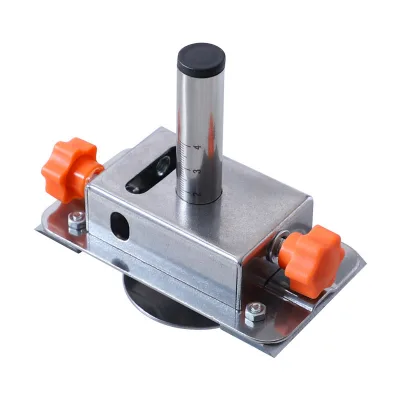


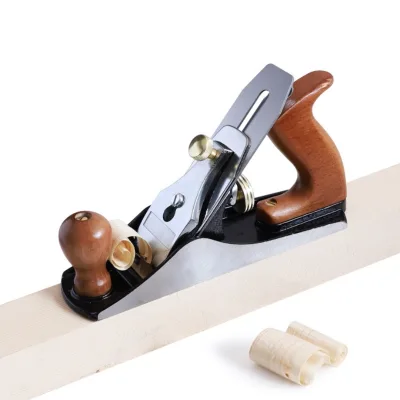
Comprehensive Sourcing Guide
European Parallel Woodworking Scriber Sourcing Guide
The European parallel woodworking scriber represents a specialized category of precision marking tools designed for high-volume timber processing environments. While the supplied data highlights heavy-duty machinery like four-sided planers and edgebanders, the core requirement for a scriber involves accurate, parallel line generation on wood surfaces to guide subsequent cutting or shaping operations. Buyers must distinguish between simple manual marking devices and automated systems integrated into feed drivetrains, as the latter often appear in industrial woodworking factories where consistency is paramount.
Procurement strategies for this equipment require a clear understanding of the distinction between standalone marking tools and integrated production line components. The observed product attributes indicate a market dominated by complex machinery with motor powers exceeding 10kW and spindle speeds over 5000rpm, suggesting that true parallel scribers in this context are often part of larger automated systems rather than simple hand tools. Sourcing decisions should focus on verifying whether the specific unit functions as a standalone marking device or as a critical component within a heavy processing workflow, ensuring compatibility with existing feed mechanisms.
Product Scope and Observed Listing Signals
The observed product listings reveal a diverse range of woodworking machinery, including four-sided planers, single-sided pressure planers, and curve edgebanders, which often incorporate scriber-like functions for material alignment. The data indicates that these machines typically feature mechanical entry methods and are designed for applications within woodworking factories, where they perform planing, moulting, and trimming functions. Buyers should note that while specific "scribing" tools may not be explicitly named in every listing, the functional requirements for parallel marking are often embedded within the broader capabilities of these heavy processing units.
Listing signals suggest that customization is a primary driver in this market, with suppliers offering OEM, ODM, and OBM support to tailor machinery to specific production needs. The presence of models like the M823L and MB102 alongside standard packaging options indicates a flexible supply chain capable of adapting to various industrial requirements. When evaluating potential suppliers, buyers must scrutinize the specific function descriptions to confirm that the machine includes the necessary parallel alignment features, as the general category often encompasses a wide array of processing tasks beyond simple marking.
Technical Specifications to Verify
Technical verification for parallel woodworking scribers must prioritize the integration of feed drivetrains and motor power specifications to ensure operational stability. The supplied facts highlight that industrial-grade units often possess motor powers exceeding 10kW and spindle speeds greater than 5000rpm, which are critical for maintaining consistent parallel lines during high-speed processing. Buyers should explicitly confirm that the feed mechanism is designed to handle the specific working depths and widths required for their production volume, as variations in these parameters can significantly impact the accuracy of the parallel marking.
Dimensional consistency and material compatibility are equally critical when selecting a scriber system for European standards. The observed data includes working depths ranging from 100mm to over 200mm and working widths between 200mm and 400mm, providing a baseline for expected performance. Procurement teams must verify that the machine's physical dimensions, such as the standard package size or overall footprint, align with their factory floor layout. Additionally, confirming the material grade, such as industrial stainless steel components, ensures durability against the wear and tear associated with continuous heavy processing operations.
Compliance and Safety Documentation
Compliance with European safety standards is non-negotiable for woodworking machinery, particularly when sourcing equipment intended for high-speed parallel marking operations. The observed product attributes confirm that CE certification is a standard requirement, with some listings also including ISO certification to demonstrate adherence to international quality and safety benchmarks. Buyers must request valid certification documents for every unit to ensure that the machinery meets the specific regulatory requirements of the European market, as non-compliant equipment can lead to significant legal and operational liabilities.
Safety documentation should also encompass detailed operational manuals and risk assessment reports that address the specific hazards of heavy processing and mechanical entry methods. The presence of features like roller conveyors and automatic grades suggests complex machinery that requires rigorous safety protocols to prevent operator injury. Procurement teams should verify that the supplier provides comprehensive safety guides covering emergency stops, guard mechanisms, and maintenance procedures, ensuring that the parallel scriber system can be operated safely within a busy woodworking factory environment.
Cost Drivers and Commercial Terms
Cost drivers for parallel woodworking scribers are heavily influenced by the level of customization and the complexity of the integrated feed drivetrain. The observed price range of 8.89 to 35,000 USD reflects the vast difference between simple marking attachments and fully automated, heavy-processing units with advanced motor systems. Buyers must analyze the total cost of ownership, including the potential need for custom packaging, specific model configurations like the M823L/LV, and the integration of extra support systems such as roller conveyors, which can significantly impact the final commercial terms.
Commercial terms regarding minimum order quantities and lead times are critical factors in the procurement strategy for this specialized equipment. The observed MOQ range of 1 to 100 units suggests flexibility for both small-scale workshops and large industrial buyers, but buyers should negotiate based on their specific volume requirements. It is essential to clarify payment terms, shipping logistics, and warranty coverage, especially given the high-value nature of machinery with motor powers exceeding 10kW. Clear agreements on these terms prevent disputes and ensure a smooth transition from procurement to operational deployment.
Supplier Qualification and Quality Control
Supplier qualification for parallel woodworking scribers requires a thorough assessment of manufacturing capabilities and quality control processes. The observed data indicates that many suppliers originate from regions like Qingdao and Shanxi, China, and offer customized support including OEM and ODM services. Buyers should verify the supplier's track record in producing heavy processing machinery and their ability to maintain consistent quality across different models, such as the M523 or MB102, to ensure that the parallel marking function remains accurate over time.
Quality control measures must extend beyond the initial inspection to include ongoing performance monitoring and maintenance support. The presence of attributes like "Long Service Life" and "Standard Package" suggests that suppliers are focused on durability, but buyers must validate these claims through independent testing or reference checks. Establishing a robust quality assurance protocol that includes regular audits of the manufacturing process and final product testing is essential to mitigate risks associated with mechanical failures or deviations in parallel alignment specifications.
Long-Term Procurement Checks
Long-term procurement checks for parallel woodworking scribers should focus on the availability of spare parts and the supplier's commitment to after-sales support. Given the complex nature of machinery with high spindle speeds and heavy processing capabilities, buyers must ensure that critical components like cutter shafts and motor assemblies are readily available to minimize downtime. The observed customization options and specific model numbers indicate that a standardized supply chain is crucial for maintaining the operational efficiency of the parallel marking system over its intended service life.
Continuous evaluation of supplier performance and product reliability is necessary to adapt to evolving industry standards and production demands. Buyers should establish a feedback loop to monitor the performance of the scriber system in real-world conditions, checking for any deviations in working depth or width that could affect product quality. Regular reviews of the supplier's ability to provide updated technical support and adapt to new requirements will ensure that the procurement strategy remains effective and aligned with the long-term goals of the woodworking factory.
FAQs
How does a european parallel woodworking scriber differ from a four-side planer?
A european parallel woodworking scriber marks parallel guide lines on workpieces, while a four-side planer machines all four surfaces at once. Scribers are lighter tools used for layout accuracy, whereas planers like the M523 or M823L are heavy-processing machines for woodworking factories. Choose based on whether you need marking precision or material removal.
What working depth can these woodworking machines achieve?
Working depth varies by model, with observed configurations covering 100-200mm and some models exceeding 200mm. Deeper cutting capacity suits heavy processing applications in woodworking factories. Confirm the exact depth specification with the supplier before ordering, since listed models include single-sided pressure planers and four-side planers with different capabilities.
Can suppliers provide CE certified woodworking scribers and planers?
Yes, CE certification appears among the listed product attributes, and some models also list CE with ISO certification. Certification supports compliance for European buyers, but you should request the actual certificate documents from each supplier. Ask whether certification applies to the specific model configuration you intend to purchase.
Which customization options are available for these machines?
Customization is available on listed machines, with OEM, ODM, and OBM support noted. One curve edgebander is listed as fully customized with PUR or EVA glue options. When requesting customization, provide your working width, depth, and application details so suppliers can confirm feasibility, additional cost, and extended lead times before production.
How are these machines packed and shipped from China?
Listed packing options include steel pallets, wooden cases, plastic film, and standard packages made according to customer requirements. Products originate from China, with Qingdao and Shanxi noted as origins. Wooden cases and steel pallets protect heavy machines during sea freight, so confirm the packing method matches your import and handling arrangements.
What motor power and spindle speed do these machines use?
Observed configurations include motor power above 10Kw for heavy four-side planers and below 5Kw for lighter single-sided pressure planers. Spindle speed exceeds 5000rpm on listed models. Higher power suits deep, continuous processing, while lower power suits smaller workshops. Match motor specifications to your factory's electrical supply and production volume.
Can a curve edgebander handle both PUR and EVA glue?
Yes, one listed curve edgebander with trimmer specifies glue material as PUR or EVA, with glue tank overhead manufacturing principles and automatic grade. PUR offers stronger, moisture-resistant bonds, while EVA is easier to clean and more economical. Confirm which glue system is installed and whether conversion kits are available from the supplier.
How do I compare suppliers before ordering a woodworking scriber?
Compare certification documents, model specifications such as working width of 200-400mm, packing methods, and customization support across suppliers. Review MOQ ranges, which start from a single unit on some listings, and request quotations for your target configuration. Verify the supplier's location and after-sales support for mechanical-feed machines before committing.